What we do
We are a freight brokerage. Shippers send us a load — usually between 350 and 3,800 cubic feet, 8 to 50 linear feet — and we arrange its transportation with carriers that run the lane: LTL carriers' volume desks, partial and shared truckload carriers, straight-truck operators and dry van, flatbed and Conestoga truckload carriers. We do not own trucks. What we own is the method for deciding which of those carriers should move a given load, and how it should be described so the invoice matches the quote.
The freight we specialise in is the freight standard LTL handles worst: HVAC ductwork and air handlers, commercial cabinetry and millwork, medical and laboratory equipment, rotomolded tanks and piping, packaging and gaylords, commercial furniture, trade-show crates, electrical enclosures, automotive body parts and commercial kitchen equipment. All of it is tall, light, non-stackable or oddly shaped — and all of it is what carrier dimensioners are built to catch.
Carrier tariff surveillance
LTL pricing is two documents: the rate (often a class-based tariff with a discount, or an FAK agreement) and the carrier's rules tariff, which defines everything that can change the bill after pickup — reweigh and inspection, cubic capacity minimums, linear-foot rules, accessorials. We keep an index of the cube-related items in the major carriers' rules tariffs and the triggers they use:
| Carrier | Rules tariff item | Cube / LF trigger | Height imputation | Re-rating mechanism |
|---|---|---|---|---|
| Old Dominion | ODFL 100 Item 610-1 | ≥ 750 cu ft under 6 PCF; ≥ 15 LF | Non-stackable or 48–60 in+ units cubed to 96 in | 6 lbs × cu ft at class 125/150 or minimum floor; FAK discount voided |
| XPO | CNWY 199 Item 233 | Tier 1 ≥ 350 cu ft under 3 PCF · Tier 2 ≥ 750 cu ft under 6 PCF | "Do not stack", cone-top or > 60 in cubed to 96 in | Cube × 6 PCF at applicable class with restricted discount, or flat cubic minimum |
| Saia | SAIA 170 Item 111 | ≥ 350 cu ft under 3 PCF or ≥ 750 cu ft under 6 PCF | Forced 96 in on non-stackable / irregular tops | Synthetic density weight floor + W&I inspection fee |
| FedEx Freight | FXF 100 series | ≥ 750 cu ft under 6 PCF, or 10–15+ LF | Over 60 in or non-stackable calculated at 96 in | Minimum density weight or linear-foot minimum charge |
| ABF Freight | ABF 111 Item 616 / 611 | ≥ 350 cu ft under 3 PCF or ≥ 750 cu ft under 6 PCF | Full trailer height (96–102 in) when top-loading restricted | 6 lbs/cu ft synthetic weight or cubic minimum schedule |
| Estes | EXLA 105 | ≥ 350 / ≥ 750 cu ft low-density; 12–15 LF | Non-stackable assessed full 96 in | Re-billed as capacity load / volume rate, contract discount stripped |
| R+L Carriers | RLCA 100 | ≥ 750 cu ft under 6 PCF or ≥ 12 LF | Full height imputed when freight cannot bear top weight | 750–1,000 lbs per LF synthetic floor + W&I correction |
| TForce Freight | UPGF 102 | ≥ 750 cu ft under 6 PCF | 96 in imputation on non-stackable skids | Synthetic weight adjustment + reclassification fee |
Summary of carrier rules tariff provisions as indexed by Cubic Transport. Carriers reissue rules tariffs; the current issue on the carrier's site governs any bill.
Carriers revise rules tariffs. When a revision changes a threshold, the engine's carrier rule sets change with it, and so do the guides on this site. The carrier's current published issue always governs a bill; our index is a working summary for planning and pre-audit.
Dimensional rating methodology
- Measure the silhouette. Outside dimensions at the widest points, pallet and overhang included — the way an overhead dimensioner sees the unit.
- Weigh with the pallet. Total handling-unit weight; density is never computed on net product weight.
- Apply imputation honestly. Non-stackable units and units over about 60 inches are cubed to 96 inches, because carriers will.
- Classify on the 13-tier scale. Density mapped to the NMFC subprovisions published through NMFTA Docket 2025-1, on both actual and tariff cube.
- Measure floor space. Linear feet with two units across and stacking only where the freight genuinely allows it.
- Test every rule. Tariff cube and density against each carrier's cubic capacity tiers; linear feet against each linear-foot rule.
- Price the alternatives. Volume LTL, direct partial, dedicated and truckload on the same freight, then recommend one.
The engine we use on every tender
- Safe — tariff cube, density and linear feet stay under the carrier's cube and linear-foot rules.
- Tier 1 — 350 cu ft or more under 3 PCF (XPO, Saia, ABF, Estes): synthetic weight of 6 lbs per tariff cubic foot.
- Re-bill — 750 cu ft or more under 6 PCF, or linear feet at the carrier's rule: book volume LTL or direct partial truckload.
How we choose carriers
For every booking we check that the carrier holds active operating authority and cargo insurance appropriate to the freight, and we prefer carriers that already run the lane and equipment the load needs — air-ride for medical and electronics, liftgate box trucks for job-site and inside deliveries, Conestogas for side-loaded crates. Partial truckload carriers are chosen for how they plan multi-stop loads: we want freight loaded in delivery sequence and not re-handled en route.
We quote indicative figures openly — the model behind the engine's mode table is described on the calculator page — and tendered rates in writing with a reference number.
Contact
| For | Address | Hours |
|---|---|---|
| Rate tenders and quotes | rates@cubictransport.com | Mon–Fri 06:00–19:00 CT |
| Dispatch and loads in transit | dispatch@cubictransport.com | Spot volume dispatch 24/7 |
| Everything else | hello@cubictransport.com | Business days |
The fastest route to a rate is the spot rate tender.
Photo credits
Photography and video on this site are licensed from Pexels contributors and used as illustration of North American freight operations; they do not depict Cubic Transport shipments or customers.
| Image | Photographer | Source |
|---|---|---|
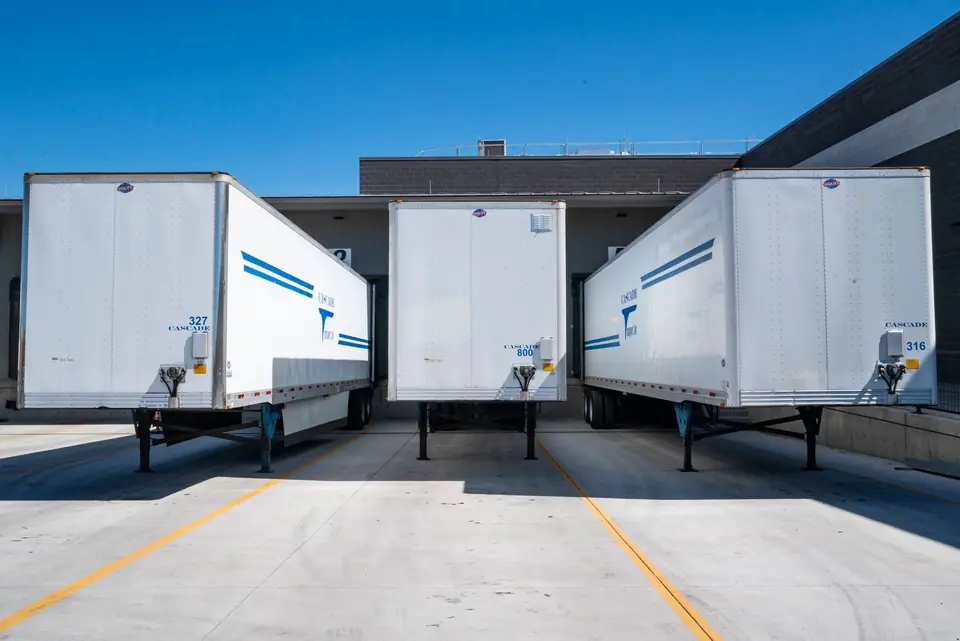
| A row of freight trailers parked at a commercial loading dock, emphasizing transportation and logistics. | Tom Jackson | Pexels |
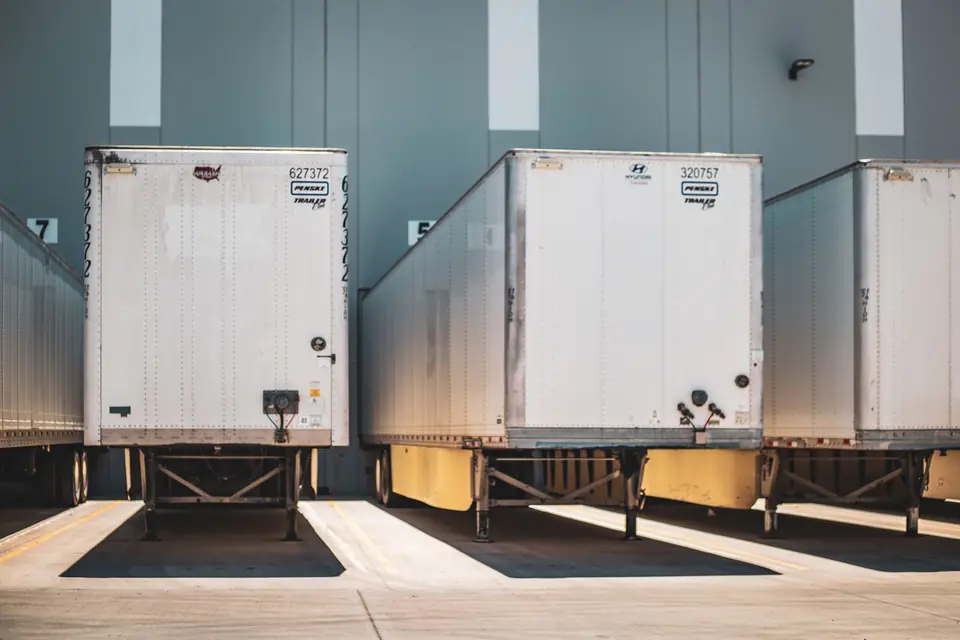
| Three white cargo trailers parked at an industrial shipping dock under clear blue skies. | ELEVATE | Pexels |
| Vibrant red semi-trailer truck driving on an open highway under a clear blue sky. | Tom Jackson | Pexels |
| A blue truck travels on the highway with Monument Valley's iconic mesas in the background. | Igor Passchier | Pexels |
| A vibrant red semi-truck travels through a desert highway with mountain views in Nevada. | Quintin Gellar | Pexels |
| A 26-foot straight box truck parked beside a brick warehouse building. | Connor Scott McManus | Pexels |
| A large stack of wooden planks loaded onto an industrial trailer in an outdoor setting. | David Brown | Pexels |
| A Class 8 heavy-haul tractor with an OVERSIZE banner pulling a lowboy trailer loaded with a Caterpillar machine on a wet interstate. | Michael Solo | Pexels |
| A forklift operator moves a palletized load of cases past a dock door at a North American warehouse. | ELEVATE | Pexels |
| A forklift operator moves stacked pallets in a busy warehouse setting. | Léster Lau | Pexels |
| Warehouse scene featuring workers and a forklift navigating aisles for logistics and inventory management. | GB The Green Brand | Pexels |
| Pile of orange cement bags on a wooden pallet in an industrial setting. | Aliaksei Smalenski | Pexels |
| A spacious industrial warehouse filled with stacked cardboard boxes for storage and shipping. | Freek Wolsink | Pexels |
| Close-up of neatly stacked wooden pallets used for shipping and storage in an industrial area. | Magda Ehlers | Pexels |
| A bustling port scene with colorful cargo containers at sunrise. Ideal for logistics concepts. | Bilal Ahmed | Pexels |
| A cargo ship loaded with containers at Hamburg's bustling commercial dock. | Wolfgang Weiser | Pexels |
| Semi truck parked at a loading dock with visible caution signs and industrial surroundings. | Craig Adderley | Pexels |
| A yellow freight truck travels on a rural road lined with trees, capturing the essence of transport in El Salvador. | Tony Rojas | Pexels |
| A drone shot of shipping containers at Barcelona Port, Spain, showcasing busy maritime activity. | James Heming | Pexels |
| Automotive body panels being refinished with a spray gun in a paint booth. | Dextar Studio | Pexels |
| A stainless-steel commercial cooking line with a combi oven and refrigerated prep base in a restaurant kitchen. | Skylar Kang | Pexels |
| A row of labeled relays and wiring inside an industrial electrical control enclosure. | Vladimir Srajber | Pexels |
| A hospital digital X-ray room with a ceiling-mounted imaging system, exam table and mobile unit. | PURPLE24 | Pexels |
| Close-up of a modern metallic ventilation system in an industrial setting. | Bingqian Li | Pexels |
| Close-up view of an air duct labeled 'SUPPLY' in an industrial setting. | Jonathan Cooper | Pexels |
| Spacious modern office with minimalist design featuring neutral tones and sleek furniture. | Max Vakhtbovych | Pexels |
| A bustling trade show exhibition inside a modern hall with people networking and exploring booths. | Tahir Xəlfəquliyev | Pexels |
| Aerial view of tractor-trailers parked at a large Interstate 80 truck stop in Iowa (video) | EJ Merl | Pexels |