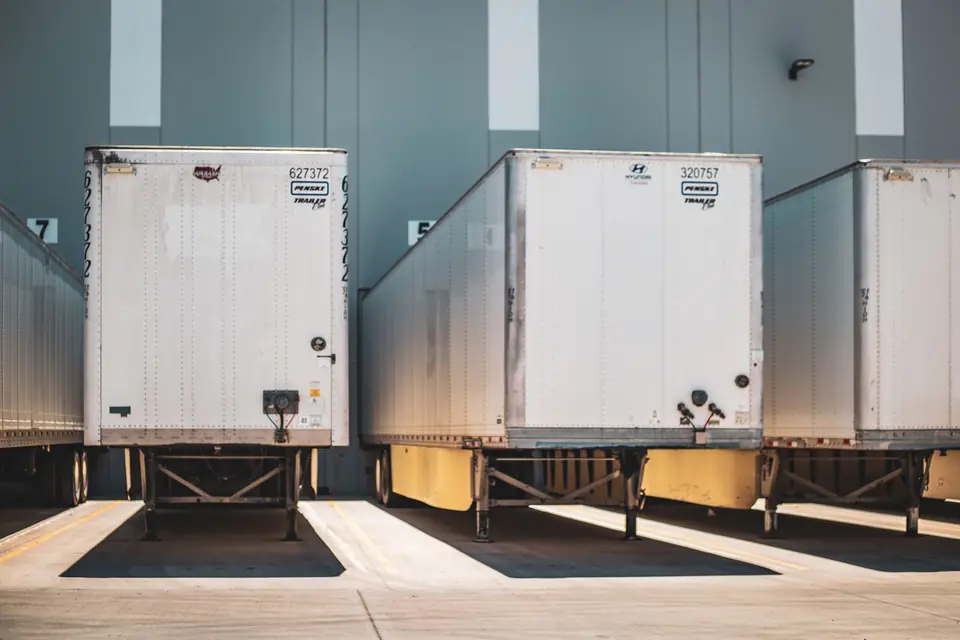
The corridor: interstates and freight hubs
Atlanta is the hub of the Southeast's highway system. Three interstates meet downtown: I-75 north to Chattanooga and Knoxville and south to Macon and Florida, I-85 northeast to Greenville-Spartanburg, Charlotte and the Piedmont Triad and southwest to Montgomery, and I-20 west to Birmingham and east to Augusta and Columbia. I-16 runs 165 miles from Macon to Savannah and carries much of the port's import freight inland. I-40 crosses the top of the region from Wilmington through Raleigh, Greensboro, Knoxville and Nashville to Memphis, and I-22 links Birmingham with Memphis.
Freight hubs for high-cube shipments:
- Atlanta: the I-85 corridor north toward Gwinnett and Jackson County, the I-75 south district around McDonough and Henry County, and the I-20 west industrial parks. Many national retailers and distributors run a regional DC here.
- Savannah: Garden City Terminal, one of the largest single container terminals in North America, with transload and distribution warehouses along I-16 and I-95 in Bryan and Effingham counties.
- Charlotte and the Carolinas: furniture in the High Point and Hickory area, textiles, auto manufacturing around Greenville-Spartanburg, and distribution along I-77 and I-85.
- Memphis: a national distribution hub at the junction of I-40 and I-55, five Class I railroads and the Mississippi River; Southaven and Olive Branch across the Mississippi line are part of the same market.
- Nashville and Chattanooga: growing automotive and appliance manufacturing along I-24 and I-75.
Lane table: Southeast mileage and transit days
Approximate highway miles between metro centers; direct PTL at roughly 500 miles per driver day, LTL with terminal handling added.
| Lane | Main route | Approx. miles | Direct PTL | LTL via terminals |
|---|---|---|---|---|
| Atlanta, GA – Greenville, SC | I-85 | 145 | Same day | 1 day |
| Memphis, TN – Nashville, TN | I-40 | 212 | Same day / next morning | 1–2 days |
| Atlanta, GA – Charlotte, NC | I-85 | 245 | 1 day | 1–2 days |
| Atlanta, GA – Savannah, GA | I-75 / I-16 | 250 | 1 day | 1–2 days |
| Atlanta, GA – Nashville, TN | I-75 / I-24 | 250 | 1 day | 1–2 days |
| Charlotte, NC – Savannah, GA | I-77 / I-26 / I-95 | 250 | 1 day | 2 days |
| Atlanta, GA – Jacksonville, FL | I-75 / I-10 | 345 | 1 day | 2 days |
| Atlanta, GA – Memphis, TN | I-20 / I-22 | 390 | 1 day | 2 days |
| Memphis, TN – Dallas, TX | I-40 / I-30 | 450 | 1 day | 2 days |
| Charlotte, NC – Memphis, TN | I-40 | 620 | 2 days | 2–3 days |
Atlanta traffic shapes appointment planning. The I-285 perimeter and the downtown connector where I-75 and I-85 merge are slow from about 6:30 to 9:30 a.m. and 3:30 to 7 p.m.; a direct PTL carrier running from Savannah to a north Atlanta DC typically plans to arrive before the morning rush or after it clears.
Commodities on Southeast lanes
The Southeast's high-cube freight comes from three sources: furniture and home goods made in the Carolinas and Mississippi, import containers through Savannah and Charleston, and a manufacturing base that grew sharply around auto, battery and appliance plants.
| Commodity | Origin areas | Handling unit | Typical density |
|---|---|---|---|
| Upholstered and case furniture | High Point, Hickory, Tupelo | Cartons on 48×40, 70–90 in, or blanket-wrapped | 2–5 PCF |
| Imported home goods and fixtures | Savannah and Charleston transloads | Floor-loaded cartons rebuilt on pallets | 3–8 PCF |
| Carpet, flooring underlayment, rolled goods | Dalton, GA | Rolls up to 12–15 ft, bundles | 4–12 PCF; length drives linear feet |
| Auto and battery plant components | Upstate SC, Middle TN, central GA | Returnable racks, tall skids | 3–10 PCF |
| Commercial cabinetry and store fixtures | Atlanta and Charlotte metro shops | Tall skids, crates, non-stackable | 3–6 PCF |
| Paper and packaging | Mills across GA, AL, SC | Rolls and bundles | Wide range |
Furniture is the classic Southeast cube-penalty commodity: a 48×40 skid of boxed seating at 80 inches tall and 280 lbs rates at about 3.2 PCF before any imputation. Our commercial furniture page covers blanket-wrap and PTL alternatives, and the cabinetry page covers casework and fixtures.
Seasonal capacity and the Savannah effect
Capacity in the Southeast is mostly balanced, with Atlanta acting as both a big receiver and a big shipper. The swings come from outside the corridor:
- Import peak, August to October. Savannah's container volume climbs ahead of holiday retail. Drayage capacity and transload warehouse labor tighten first, then 53' outbound loads from Savannah to Atlanta, Charlotte and the Midwest. Book a few days ahead when the port is busy.
- Produce, April to July. Georgia's Vidalia onions, peaches and vegetables, plus Florida's late-season crops moving north, pull reefers off the road and nudge dry van rates on lanes that touch south Georgia.
- Hurricane season, June to November. Savannah, Charleston and Jacksonville can close ahead of a storm, and evacuations reverse lanes on I-16 and I-26. After landfall, relief freight absorbs capacity across Georgia and the Carolinas.
- Florida backhaul pull. Atlanta sits at the top of the Florida headhaul. When Florida inbound rates spike, carriers in Atlanta chase those loads and Atlanta-outbound capacity in other directions thins. See the Florida corridor page.
- Winter. Mild most years, but an inch of ice in Atlanta or on I-40 through the Smoky Mountains stops freight for a day or two.
Equipment availability
The Southeast has deep dry van capacity, especially around Atlanta and Memphis, which are both major carrier domiciles. Notes by type:
- 53' dry vans are easy to find for PTL and full truckload in both directions on Atlanta lanes. Twelve single-stacked 48×40 skids take 24 linear feet, a little under half of a 53' trailer's usable floor.
- 26' box trucks are common in Atlanta, Charlotte, Nashville and Memphis. They suit furniture and fixture deliveries to retail and hospitality sites that lack a dock; most can be ordered with a liftgate. See box truck freight.
- Blanket-wrap vans for uncrated furniture are a Southeast specialty, run by carriers serving the High Point and Tupelo furniture trade.
- Flatbeds serve steel, lumber and building materials, with good supply in Alabama and Georgia.
- Container drayage at Savannah is large, but chassis availability and terminal appointment windows set the pace during peak.
Worked example: 12 skids of boxed seating, Atlanta to Memphis (390 miles)
Twelve 48×40 skids of cartoned seating, 80 inches tall, 280 lbs each, marked do not stack. Rated against XPO's CNWY 199 Item 233 tiers (350 cu ft under 3 PCF and 750 cu ft under 6 PCF) and the 12-linear-foot line.
| Measure | Value | Working |
|---|---|---|
| Actual cube | 1,066.7 cu ft | 48 × 40 × 80 ÷ 1,728 = 88.89 × 12 |
| Imputed cube at 96 in | 1,280.0 cu ft | 106.67 × 12 |
| Weight | 3,360 lbs | 280 × 12 |
| Actual density | 3.15 PCF · Class 250 | 3,360 ÷ 1,066.7 |
| Imputed density | 2.63 PCF · Class 250 | 3,360 ÷ 1,280 |
| Linear feet | 24.0 LF | 6 rows × 48 in ÷ 12 |
| Synthetic weight | 7,680 lbs | 1,280 × 6 PCF |
Both XPO tiers trigger: the imputed density of 2.63 PCF is under 3 PCF with 1,280 cu ft, well past 350 and 750. Indicative costs at 390 miles:
| Mode | Indicative cost | Transit |
|---|---|---|
| Standard LTL as booked (Class 250) | $939 | 2 days |
| Standard LTL after cubic capacity re-bill | $1,460 | 2 days |
| Spot volume LTL | $497 | 2 days |
| Direct partial truckload | $566 | 1 day |
| Dedicated 26' box truck | $917 | 1 day |
| 53' full truckload | $956 | 1 day |
Direct PTL at $566 is $373 below the as-booked LTL price and $894 below the re-billed price, and it delivers in one day instead of two. Volume LTL at $497 is $69 cheaper but still crosses two docks. The 80-inch skids clear a box truck's 90-inch door, so a dedicated box truck is an option if the Memphis consignee has no dock. Indicative numbers from our cost model; carriers reissue rules tariffs and the current CNWY 199 issue governs.
Run a Southeast load: Atlanta to Memphis is 390 miles
- Safe — tariff cube, density and linear feet stay under the carrier's cube and linear-foot rules.
- Tier 1 — 350 cu ft or more under 3 PCF (XPO, Saia, ABF, Estes): synthetic weight of 6 lbs per tariff cubic foot.
- Re-bill — 750 cu ft or more under 6 PCF, or linear feet at the carrier's rule: book volume LTL or direct partial truckload.