What makes exhibit freight different
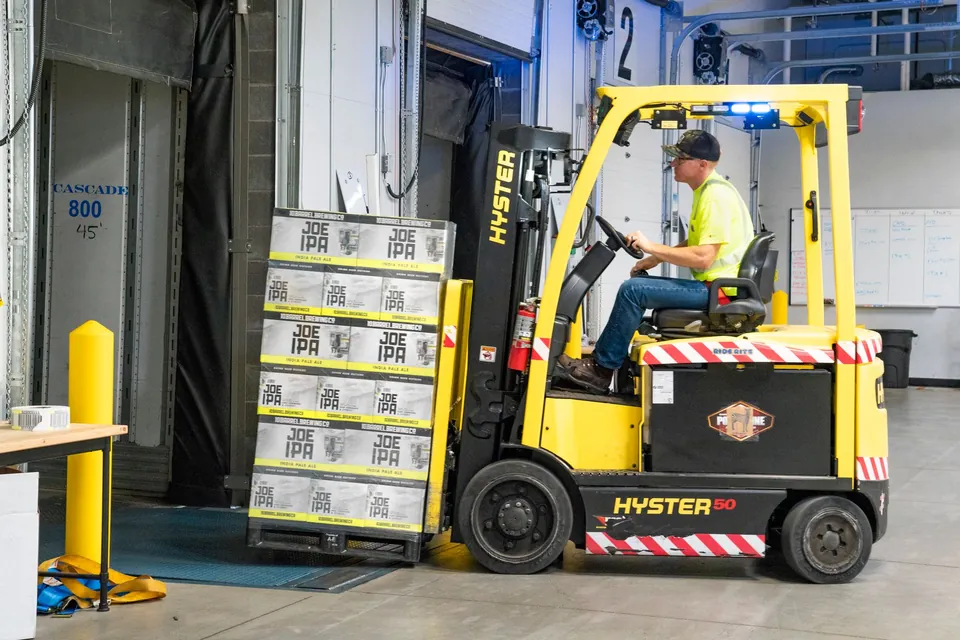
A 20 × 20 ft island exhibit typically travels as a handful of large wooden crates for structure and graphics, several road cases for AV gear and lighting, and a pallet or two of literature and giveaways. In freight terms that is a load of 4 to 6 PCF, dominated by crates taller than 60 in. Three things set it apart from other high-cube freight:
- Time windows, not transit days. Freight sent direct to show site has to arrive in a targeted move-in window, often a few hours on a specific day. Freight sent to the advance warehouse has a deadline a few days before move-in. Arriving early means storage fees; arriving late can mean the booth is not built.
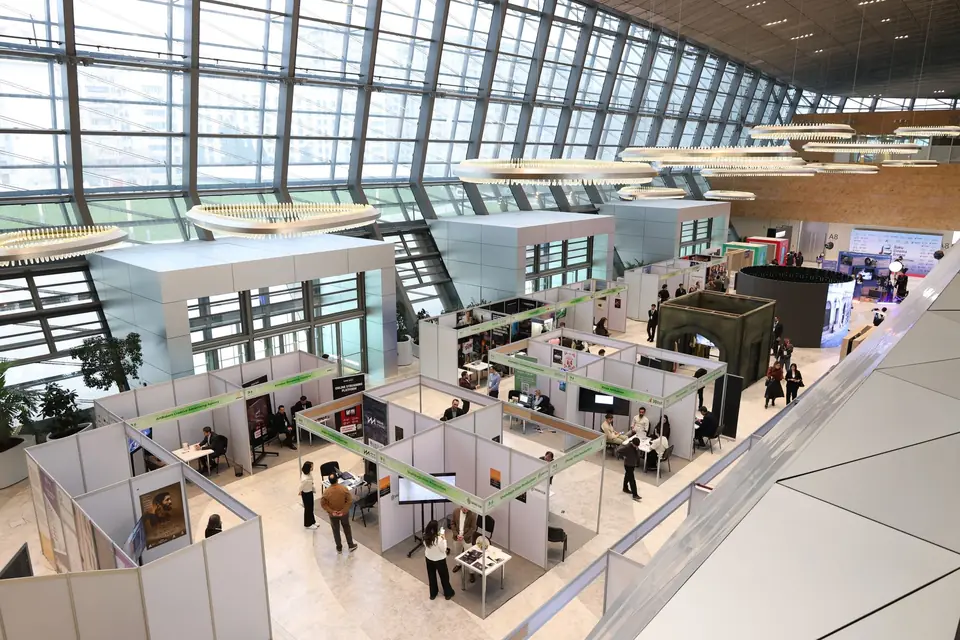
- Marshaling yards. Large convention centers stage trucks in a marshaling yard and call them to the dock in order. Drivers wait, sometimes for hours, and carriers charge for that wait.
- The return leg. Outbound freight must be picked up by a carrier check-in deadline after the show closes. If your carrier is not checked in by then, the show's general contractor typically reroutes the freight to its own designated carrier at the exhibitor's cost.
Material handling at the venue, often called drayage, is billed by the show's general service contractor per 100 lbs, separately from transportation. It is not part of any carrier rate, and it is one more reason to ship accurate weights: the contractor weighs freight too.
Exhibitors who run a show calendar face this cycle several times a year, often show to show without returning to the warehouse. Each leg has its own deadlines and its own venue rules, and freight that misses one show's outbound deadline can miss the next show's move-in. Treating each leg as a separate LTL booking puts the crates into a network that does not know about either deadline. Booking the tour as a series of partial or exclusive-use moves keeps one plan, one set of piece counts and one point of contact across the whole run.
Typical exhibit handling units
| Unit | L × W × H (in) | Lbs | Cu ft | PCF | Class | Cubed to 96 in |
|---|---|---|---|---|---|---|
| Exhibit structure crate | 96 × 48 × 72 | 780 | 192.0 | 4.06 | 175 | 3.05 PCF · 250 |
| Road case (AV, lighting) | 48 × 24 × 40 | 220 | 26.7 | 8.25 | 100 | 3.44 PCF · 250 if not stacked |
| Literature and giveaways, 1 pallet | 48 × 40 × 48 | 900 | 53.3 | 16.88 | 70 | 8.44 PCF · 100 if not stacked |
| Graphics tube crate | 96 × 24 × 24 | 140 | 32.0 | 4.38 | 175 | 1.09 PCF · 300 if not stacked |
The exhibit crate is the unit that matters. At 72 in it is over the 60 in height at which carriers assume nothing can ride on top, so it is cubed to 96 in even if the crate lid is rated for weight. Road cases and literature pallets are stackable and dense, and a well-built load puts them on top of each other, not on the floor beside the crates. Graphics tubes and flat graphic crates are light and should always ride on top of something; on their own and marked do-not-stack, they rate at class 300.
Run an exhibit load against ODFL Item 610-1
- Safe — tariff cube, density and linear feet stay under the carrier's cube and linear-foot rules.
- Tier 1 — 350 cu ft or more under 3 PCF (XPO, Saia, ABF, Estes): synthetic weight of 6 lbs per tariff cubic foot.
- Re-bill — 750 cu ft or more under 6 PCF, or linear feet at the carrier's rule: book volume LTL or direct partial truckload.
Worked example: a 20 × 20 exhibit on Old Dominion
An exhibitor ships 1,200 miles to a convention center: four exhibit crates at 96 × 48 × 72 in and 780 lbs, four stackable road cases at 48 × 24 × 40 in and 220 lbs, and one stackable literature pallet at 48 × 40 × 48 in and 900 lbs. The crates are marked do-not-stack. The exhibitor's LTL account is with Old Dominion (ODFL 100 Item 610-1: 750 cu ft under 6 PCF; 15 LF).
Road cases: 48 × 24 × 40 ÷ 1,728 = 26.7 cu ft × 4 = 106.7 cu ft
Literature: 48 × 40 × 48 ÷ 1,728 = 53.3 cu ft
Actual cube = 928.0 cu ft · Weight = 3,120 + 880 + 900 = 4,900 lbs
Density = 4,900 ÷ 928.0 = 5.28 PCF → Sub 4, class 175
Imputed cube = 1,024.0 + 106.7 + 53.3 = 1,184.0 cu ft · Imputed density = 4.14 PCF
Synthetic weight at 6 PCF = 1,184.0 × 6 = 7,104 lbs
Linear feet = 2 rows of crates × 96 in + 1 row of cases × 48 in + 1 row × 48 in = 288 in ÷ 12 = 24.0 LF
Even on actual cube the shipment is 928 cu ft at 5.28 PCF, over Item 610-1's trigger. With imputation the carrier rates 7,104 lbs instead of 4,900.
| Option at 1,200 miles | Indicative linehaul |
|---|---|
| Class 175 LTL as booked | $1,792 |
| After Item 610-1 re-rate and W&I fee | $2,478 |
| Spot volume LTL on 24 LF | $1,529 |
| Direct partial truckload on 24 LF | $1,743 |
| Dedicated 26 ft box truck | $2,820 |
Volume LTL is cheapest on paper, but it moves through terminals on the carrier's schedule, and a show-site window does not move. The direct partial at about $1,743 is $735 under the re-rated LTL bill and travels on a defined pickup and delivery plan. Waiting time in the marshaling yard is a separate line on any mode; we quote it up front instead of leaving it to the invoice.
Advance warehouse or direct to show site
| Advance warehouse | Direct to show site | |
|---|---|---|
| Delivery window | Weekdays, typically several weeks up to a few days before move-in | Targeted move-in window, often a few hours |
| Risk of missing the booth build | Low; freight is already in town | Higher; one late truck delays the build |
| Cost | Higher material handling rate from the contractor | Lower handling rate; possible marshaling wait charges |
| Best mode | Volume LTL or partial, with buffer days | Direct partial or exclusive-use truck |
Read the exhibitor service kit before booking: it lists the advance warehouse address and deadlines, the show-site target times, the outbound carrier check-in deadline, and the labels each piece must carry. We build the pickup date backwards from those dates, not forwards from the day the crates are ready.
Crating, loading and accessorials
- Build crates with forkable bases and rated lids. Even though a 72 in crate is cubed to 96 in, a rated lid lets the carrier load road cases and graphics on top, which cuts your linear feet.
- Keep crates at or under 60 in where the exhibit allows. A crate split into two 48 in crates that genuinely stack is billed at actual height. That is the single biggest lever on exhibit freight costs.
- Label every piece with the show labels. Exhibitor name, booth number and piece count (1 of 9, 2 of 9). Unlabeled pieces sit on the floor while the contractor works out where they belong.
- Load in booth-build order. Structure crates last on the truck so they come off first.
- Plan the return before you leave. Book the outbound pickup with the inbound so the carrier is checked in before the deadline.
Typical accessorials are liftgate for hotel ballrooms and smaller venues, limited-access charges at convention centers, detention for marshaling-yard waits, and appointment fees. On a partial or exclusive-use truck we put them in the quote.
Which mode Cubic Transport tenders exhibits on
Small tabletop exhibits in cases go standard LTL to the advance warehouse with buffer days. Island and inline exhibits with crates over 60 in go on a direct partial truckload to the show site or advance warehouse, with the return leg booked at the same time. Large exhibits and multi-show tours go on an exclusive-use 53 ft van or a 26 ft box truck that stays with the freight. Cubic Transport is a brokerage; we select and manage the carrier. Booth installation and venue material handling are provided by your exhibit house and the show contractor.