What a dedicated box truck buys you
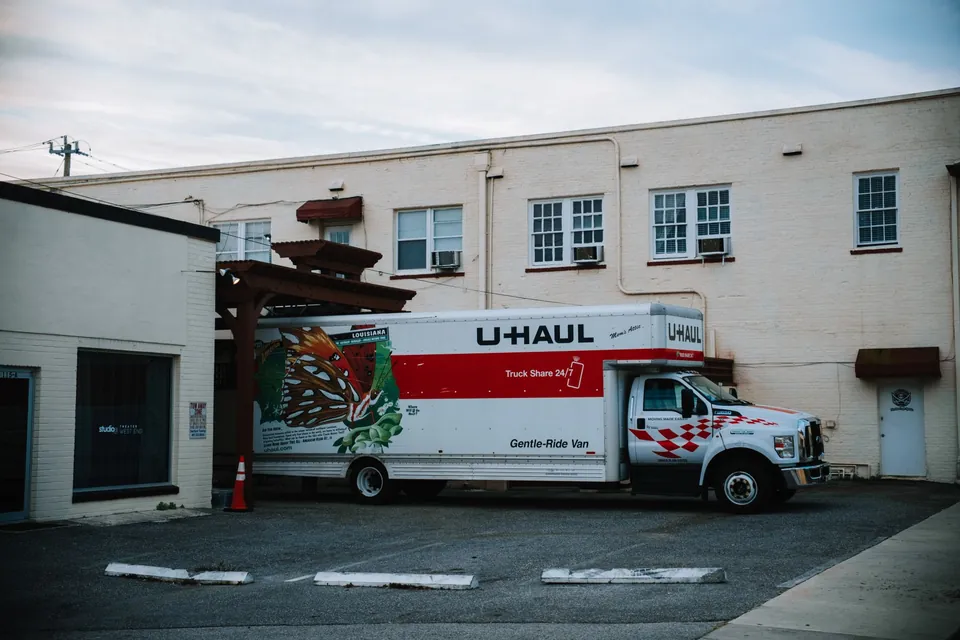
A straight truck has the cargo box mounted on the same chassis as the cab. The 26-foot box is the largest common size, and it sits just under the 26,001-lb gross vehicle weight rating where a commercial driver's licence becomes mandatory in the United States, which keeps the pool of trucks and drivers large. Most operators run them in metro and regional work.
Booked dedicated, the truck picks up your freight, drives to your consignee and unloads. Nothing else rides with it unless you agree. That makes it the natural choice for medical and laboratory equipment, trade show crates, retail fixtures and anything that needs a liftgate, a careful driver or delivery into a site a tractor-trailer cannot reach.
Cubic Transport tenders box truck loads to vetted straight-truck carriers; we do not own trucks. We size the load against the specific box, confirm liftgate and door clearances, and schedule the pickup and delivery windows.
26-foot box truck specifications
Box bodies vary by builder, so treat these as typical working figures and confirm the specific truck for anything close to a limit.
| Specification | Typical figure | Notes |
|---|---|---|
| Interior length | 26' (312") | Some bodies are 25'6" to 26' clear inside |
| Interior width | ~96" | E-track or logistic posts can take 1–2" per side |
| Interior height | 96–104" | Varies with the body; 96" is the planning figure |
| Rear roll-up door opening | ~90" high | The roll-up drum takes clearance; swing doors give more |
| Cubic capacity | 1,664–1,800 cu ft | 312 × 96 × 96 ÷ 1,728 = 1,664; at 101" height, about 1,750 |
| Pallet floor positions (48×40) | 12 | 2 across × 6 rows of 48"; 24 if double-stacked |
| Payload | ~10,000–12,500 lbs | Depends on chassis, body and liftgate weight |
| GVWR | up to 26,000 lbs | Non-CDL ceiling |
| Liftgate | Rail or tuck-under | Commonly rated around 2,500–3,000 lbs per lift |
The turned pattern, 40-inch sides along the length, gives 7 rows of 40 inches in 312 inches, so 14 positions in theory. It needs 96 inches of clear width for two 48-inch pallets side by side, which most bodies do not have once wall track is fitted. Plan on 12.
Pallet capacity by straight-truck length
| Box length | Interior length | Straight 48×40 positions | Typical payload | Common use |
|---|---|---|---|---|
| 16' | 192" | 8 | ~4,000–5,000 lbs | Metro deliveries, small partials |
| 20' | 240" | 10 | ~6,000–8,000 lbs | Regional distribution |
| 24' | 288" | 12 | ~8,000–10,000 lbs | Regional, liftgate work |
| 26' | 312" | 12 | ~10,000–12,500 lbs | Dedicated expedited, trade show, medical |
A 26-foot box gains no straight positions over a 24-foot box with 48-inch pallets (312 ÷ 48 = 6.5, so six rows), but the extra 24 inches matter for crates, long items and turned pallets. Widths and payloads on the smaller trucks vary more by builder; confirm before booking a full box.
Check your load against a 26-foot box
- Safe — tariff cube, density and linear feet stay under the carrier's cube and linear-foot rules.
- Tier 1 — 350 cu ft or more under 3 PCF (XPO, Saia, ABF, Estes): synthetic weight of 6 lbs per tariff cubic foot.
- Re-bill — 750 cu ft or more under 6 PCF, or linear feet at the carrier's rule: book volume LTL or direct partial truckload.
Worked example: twelve tall skids, 250 and 600 miles
Twelve skids of lab benches, 48×40×72 inches, 600 lbs each, non-stackable. The engine preset loads this at 250 miles.
- Cube. 48 × 40 × 72 = 138,240 ÷ 1,728 = 80 cu ft × 12 = 960 cu ft, 58% of a 1,664-cu-ft box.
- Density. 12 × 600 = 7,200 lbs ÷ 960 = 7.5 PCF, Class 125. Weight is 72% of a 10,000-lb payload.
- Floor. Two across in six rows of 48 inches = 24 linear feet, leaving 2 feet of the 26-foot box. 72 inches clears a 90-inch roll-up door.
- LTL exposure. Tall and non-stackable, so cubed at 96 inches: 1,280 cu ft at 5.63 PCF, past the 750-under-6 tier, and 24 linear feet is twice the 12-foot line.
| Option | 250 miles | 600 miles |
|---|---|---|
| Class LTL as booked | $855 | $1,233 |
| Class LTL after cube re-rate | $1,251 | $1,775 |
| Spot volume LTL | $338 | $764 |
| Direct partial truckload | $395 | $872 |
| Dedicated 26' box truck | $588 | $1,410 |
| 53' truckload | $650 | $1,470 |
At 250 miles the box truck costs $193 more than a partial and $62 less than a 53-foot van, and it is the only option that is exclusive-use with a liftgate available. At 600 miles a partial costs $538 less and volume LTL less again, so the box truck has to earn its place on handling, liftgate or timing. Against the re-rated LTL bill it wins at both distances. Figures are indicative from our cost model.
When a box truck beats a 53-foot van or a partial
- Short hauls. Under roughly 300 to 400 miles a box truck's per-mile cost is close to a tractor-trailer's and it carries no co-load stops.
- No dock at delivery. Hospitals, schools, job sites, retail backdoors and convention centres often need a liftgate and a truck that fits the street.
- White-glove or inside delivery. One driver, often with a helper, handles the freight from your dock to the room it is going to. See medical and lab equipment freight.
- Time-critical freight. A dedicated truck leaves when loaded. Trade show freight on a marshalling-yard schedule is a typical case: see trade show crate shipping.
- Freight that should not share. High-value or easily damaged items where any co-load is a risk.
Limits that catch shippers
- Liftgate capacity. A single skid heavier than the gate rating, commonly 2,500 to 3,000 lbs, cannot be lowered on the gate. Heavy units need a dock or a forklift at delivery.
- Liftgate platform depth. Crates longer than the platform overhang it. Give us crate length when a liftgate is needed.
- Payload. Twelve 1,000-lb pallets weigh 12,000 lbs, above many 26-foot trucks' payload. Dense freight weighs out before it fills the floor.
- Floor loading. Point loads from machinery feet can exceed what a box floor is rated for; skid them.
Box truck, partial or 53-foot: a quick sizing guide
The engine on this page reports what share of a 26-foot box your load occupies. Use that number with distance to pick the equipment.
| Load | Under ~300 miles | 300–700 miles | Over ~700 miles |
|---|---|---|---|
| Up to 6 skids, under 12 linear feet | Class LTL, or box truck if liftgate or time-critical | Class LTL | Class LTL |
| 6–12 skids, 12–24 linear feet, under 10,000 lbs | Direct partial, or 26' box truck for exclusive use or a liftgate | Direct partial, or box truck | Direct partial or volume LTL |
| 12+ skids or over 24 linear feet | 53' van or partial | Direct partial | Partial or 53' truckload |
| Over 10,000–12,500 lbs | 53' van or partial | Partial or 53' truckload | Partial or 53' truckload |
The box truck column narrows with distance because a straight truck costs nearly as much per mile as a tractor-trailer while carrying about a third of the floor. Over long runs the 53-foot van or a partial on one spreads that cost across more freight. The exception is freight that genuinely needs exclusive use, a liftgate or a specific delivery time, where the box truck stays the right answer at any distance a driver can legally cover.
Cube matters as much as floor. Twelve 72-inch skids fill the floor at 960 cu ft; twenty-four 45-inch stackable pallets double-stacked use the same 12 positions but carry 1,200 cu ft, and at 500 lbs each they would weigh 12,000 lbs, past many trucks' payload. Check both in the capacity reference.
How Cubic Transport tenders a box truck
- Size it. Piece count, L×W×H and weight per unit, including the tallest and heaviest single item.
- Check access. Dock or ground level at each end, liftgate needs, inside delivery, any height or length limit on the street.
- Price the alternatives. On longer runs we price a partial alongside so you can see what exclusivity costs.
- Tender and schedule. The load goes to a straight-truck carrier with the right body and gate, with confirmed windows at both ends.
Send it to dispatch@cubictransport.com for same-day work or the tender form for planned loads.