How a shared truckload is built
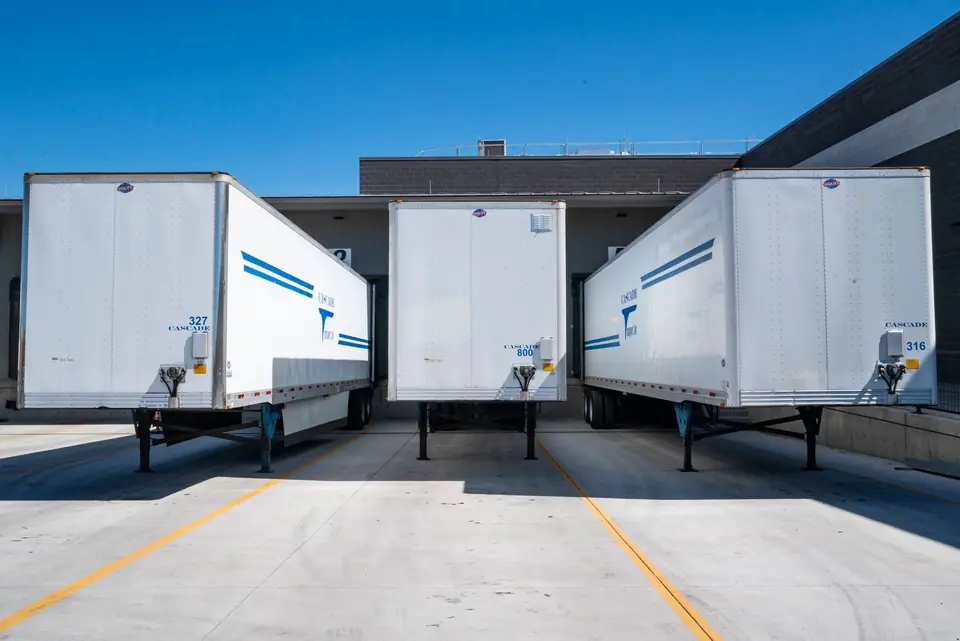
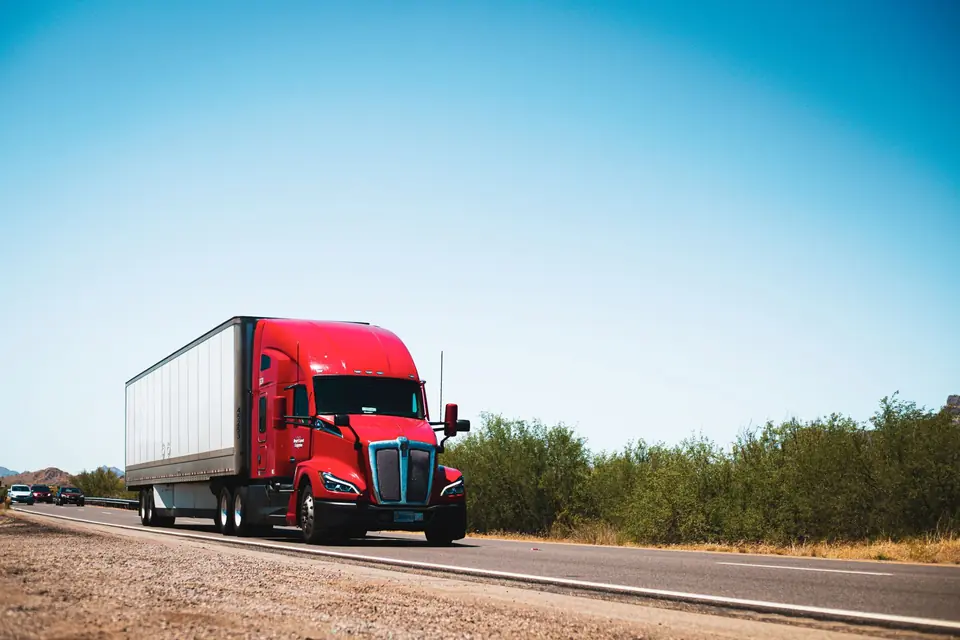
A shared truckload starts with one 53-foot dry van and a lane. The carrier, or a broker working with it, collects partial shipments that fit the route: one pickup in Chicago and one in Indianapolis heading to Atlanta and Charlotte, for example. Each shipment is sold by the linear feet it takes. The van is loaded in an order that lets each delivery come off the back without moving anyone else's freight, and it runs from first pickup to last delivery without ever entering a terminal.
The industry uses "shared truckload" and "partial truckload" loosely, and the two overlap. In our usage a direct partial is your freight plus whatever the carrier is already hauling; a shared truckload is a load deliberately planned around several shippers' partials, with the stop plan and the floor plan built together. For you, the economics and the handling are the same: you pay for your feet of floor, and your freight is touched only at your dock and your consignee's.
Cubic Transport does not own vans. We place shared loads with carriers that run the corridor, provide the floor plan and stop sequence for our shipper's freight, and manage pickup and delivery through to proof of delivery.
Shared truckload against the other mid-size options
| Shared truckload | Direct partial | Spot volume LTL | 53' truckload | |
|---|---|---|---|---|
| Who is on the trailer | 2–4 planned partials | Your freight plus carrier's other freight | Many LTL shipments | You only |
| Stops | Several pickups and deliveries | Usually one or two others | Terminal network | One pickup, one delivery |
| Cross-dock | None | None | Yes | None |
| Priced by | Linear feet and miles | Linear feet and miles | Linear feet and weight | Miles |
| Transit | Truckload plus stop time | Truckload plus stop time | Terminal schedule | Truckload |
| Cube re-rate risk | None | None | If dimensions differ from quote | None |
For a shipper the choice between shared and direct partial usually comes down to the lane: on corridors with steady partial volume, a planned shared load gives the tightest pricing; on thinner lanes, a carrier that already has a partial running is the better match. We quote both when the load allows.
Stop sequence and floor plan
A 53-foot van gives about 52.5 feet of usable floor. In a shared load that floor is divided by delivery order: the first delivery goes in last, at the doors, and the last delivery goes in first, at the nose. Pickups follow the reverse logic, which is why stop order is agreed before the first pallet is loaded.
- Load bars or straps between shippers. Each shipper's section is secured on its own so an early delivery does not leave the remaining freight loose.
- Heavy forward, light aft, within axle limits. A combined load still has to scale legally on the steer, drive and trailer axles, so dense shipments generally ride toward the nose.
- Nothing on top of someone else. Shared loads are planned on floor space. Freight from different shippers is not stacked together, which is also why non-stackable freight fits shared loads well.
- Clear paperwork per stop. Each shipment carries its own bill of lading, and the driver signs for pieces at each pickup.
Worked example: mixed skids and crates, 1,400 miles
A fixture maker ships eight non-stackable skids of display cases, 48×40×70 inches at 420 lbs, plus two crates of counters, 96×48×60 inches at 900 lbs, 1,400 miles. The engine preset loads this mix.
- Skid cube. 48 × 40 × 70 = 134,400 ÷ 1,728 = 77.78 cu ft × 8 = 622.2 cu ft.
- Crate cube. 96 × 48 × 60 = 276,480 ÷ 1,728 = 160 cu ft × 2 = 320 cu ft. Total 942.2 cu ft.
- Weight and density. 8 × 420 + 2 × 900 = 3,360 + 1,800 = 5,160 lbs ÷ 942.2 = 5.48 PCF, Class 175.
- LTL tariff cube. Both lines are non-stackable, so both are cubed at 96 inches: 853.3 + 512.0 = 1,365.3 cu ft, 3.78 PCF. That is past the 750-under-6 tier.
- Floor. Skids two across in four rows of 48 inches: 16 feet. Crates two across (96 inches in a 98.5-inch van) in one row of 96 inches: 8 feet. Total 24 linear feet, 46% of the van.
| Option | Indicative cost, 1,400 miles |
|---|---|
| Class LTL as booked | $2,104 |
| Class LTL after cube re-rate | $3,167 |
| Spot volume LTL | $1,784 |
| Shared or direct partial (24 linear feet) | $2,034 |
| 53' truckload, exclusive | $3,430 |
The shared option leaves 28.5 feet for one or two other shippers and saves about $1,133 against the re-rated LTL bill, with glass display cases loaded once. Volume LTL is $250 cheaper again, but it would send glass through terminal docks. Figures are planning estimates from our cost model.
Size your share of a 53-foot van
- Safe — tariff cube, density and linear feet stay under the carrier's cube and linear-foot rules.
- Tier 1 — 350 cu ft or more under 3 PCF (XPO, Saia, ABF, Estes): synthetic weight of 6 lbs per tariff cubic foot.
- Re-bill — 750 cu ft or more under 6 PCF, or linear feet at the carrier's rule: book volume LTL or direct partial truckload.
What makes freight a good co-load
| Good fit | Needs a check | Usually exclusive-use |
|---|---|---|
| Palletized or crated dry freight with a clean footprint | Hazmat: compatibility with other freight and placarding | High-value loads requiring a sealed trailer |
| Non-stackable but stable skids | Food and packaging near anything with odour | Loads with strict chain-of-custody |
| Flexible pickup and delivery windows | Liftgate or inside delivery at one stop | Freight over about 34 linear feet |
| Dense freight that can ride at the nose | Units over 96 inches tall | Temperature-controlled freight in a dry lane |
Tall freight deserves a note. A 53-foot van has roughly 110 inches of interior height but the rear door opening is lower, and some vans have less clear height at the nose. Units over 96 inches should be measured against the specific trailer; see 53-foot dry van dimensions.
What you pay for on a shared load
A share of a trailer is priced on three things: the linear feet you take, the miles between your pickup and your delivery, and how much your stops constrain the rest of the load. Weight enters only when the combined load gets near legal limits, which on a 53-foot van is around 44,000 to 45,000 lbs of cargo.
| Your share | Linear feet | Share of 52.5 ft | 48×40 non-stackable skids |
|---|---|---|---|
| Small | 8–12 | 15–23% | 4–6 |
| Medium | 16–24 | 30–46% | 8–12 |
| Large | 28–32 | 53–61% | 14–16 |
Past the large band, price an exclusive 53-foot truckload alongside: the carrier has too little floor left to sell, so the share price gets close to the whole-trailer price. Below the small band, class LTL or volume LTL is usually cheaper unless the freight is light enough to trip a cube rule.
Transit and appointment expectations
A shared load moves at truckload speed between stops, and each extra stop adds time: the approach, the dock wait and the unload. On a two-pickup, two-delivery load over 1,400 miles, plan on about one extra day against a direct truckload on the same lane, less if the stops sit close to the route. That is often still faster than class LTL over the same distance, which waits on terminal departures.
Shipper discipline matters more on a shared load than on any other mode, because a late dock at one stop delays everyone. Have freight staged, wrapped and labelled with the bill of lading ready before the window opens. The BOL dimensional checklist covers the label and paperwork format.
How Cubic Transport tenders a shared load
- Floor plan your freight. Linear feet, loading pattern, stackability and weight, from the engine on this page or the linear foot calculator.
- Set windows. Earliest pickup, latest delivery and any hard appointment.
- Match the lane. We place the load with a carrier building shared or partial loads on that corridor, and price a direct partial and a truckload alongside.
- Confirm the plan. Stop order, position on the trailer and securement between shipments.
- Track every stop. Dispatch follows the run stop by stop until your consignee signs.
Send loads to rates@cubictransport.com or the tender form.