Five tiers above 15 PCF
The top five subprovisions of the 13-tier scale cover freight from 15 PCF upward. These are the bands for canned and bottled goods, tile, fasteners, dry chemicals in bags, sheet and bar steel, brick, batteries and castings.
| Sub | Class | Density | Old 11-tier class | 48×40×36 pallet (40 cu ft) | Typical freight |
|---|---|---|---|---|---|
| 9 | 70 | 15 to under 22.5 PCF | 70 | 600 to 899 lbs | Palletized canned goods, cable reels, machine components |
| 10 | 65 | 22.5 to under 30 PCF | 65 | 900 to 1,199 lbs | Bottled beverages, ceramic tile, boxed fasteners |
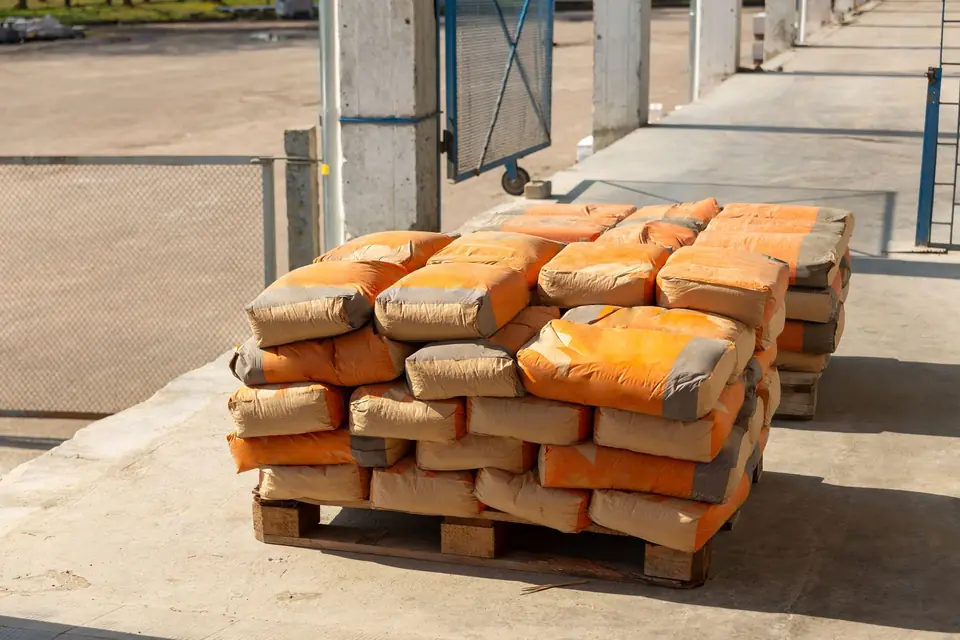
| 11 | 60 | 30 to under 35 PCF | 60 | 1,200 to 1,399 lbs | Sheet steel, bagged mortar, lead-acid batteries |
| 12 | 55 | 35 to under 50 PCF | 60 | 1,400 to 1,999 lbs | Brick, hardwood flooring bundles, bar stock, brass fittings |
| 13 | 50 | 50 PCF and up | 60 | 2,000 lbs and up | Steel coils, castings, kegs of bolts, stone slabs |
A 48 × 40 × 36 pallet is exactly 40 cubic feet (69,120 cubic inches ÷ 1,728), which makes the weight windows easy to read. Classes 55 and 50 were not invented by the docket: both already existed in the NMFC's 18-class system and in carriers' rate tables for specific commodities. What changed is that the general density scale now reaches them, so dense freight classed by density can earn them on weight and cube alone.
Worked example: six pallets of brass fittings
A distributor ships six stackable 48 × 40 pallets of boxed brass fittings, each 36 inches tall and 1,600 lbs gross.
| Step | Math | Result |
|---|---|---|
| Cube per pallet | 48 × 40 × 36 ÷ 1,728 | 40.0 cu ft |
| Total cube | 40 × 6 | 240 cu ft |
| Total weight | 1,600 × 6 | 9,600 lbs |
| Density | 9,600 ÷ 240 | 40.0 PCF |
| Class, 13-tier scale | 35 to under 50 PCF = Sub 12 | 55 |
| Class, old 11-tier scale | 30 PCF and up | 60 |
On our indicative cost model for a 600-mile lane, the shipment rates about $723 at class 55 against about $789 at class 60, a difference of roughly 8 percent, which is the gap between the two class factors. Reaching class 50 would need 50 PCF: either 2,400 lbs more across the six pallets or the same weight built 7.2 inches lower (28.8 inches tall), which for most dense products is not a realistic repack. The next sections explain why chasing class 50 is usually the wrong target anyway.
Here is how the same six-pallet, 240 cubic foot shipment classes as the product weight rises:
| Pallet weight | Shipment | Density | Class |
|---|---|---|---|
| 700 lbs | 4,200 lbs | 17.5 PCF | 70 |
| 1,000 lbs | 6,000 lbs | 25.0 PCF | 65 |
| 1,300 lbs | 7,800 lbs | 32.5 PCF | 60 |
| 1,600 lbs | 9,600 lbs | 40.0 PCF | 55 |
| 2,100 lbs | 12,600 lbs | 52.5 PCF | 50 |
See which high-density tier your load reaches
- Safe — tariff cube, density and linear feet stay under the carrier's cube and linear-foot rules.
- Tier 1 — 350 cu ft or more under 3 PCF (XPO, Saia, ABF, Estes): synthetic weight of 6 lbs per tariff cubic foot.
- Re-bill — 750 cu ft or more under 6 PCF, or linear feet at the carrier's rule: book volume LTL or direct partial truckload.
Dense freight weighs out before it cubes out
A 53-foot dry van carries roughly 44,000 to 45,000 lbs of payload and close to 4,000 cubic feet. At 40 PCF, 44,000 lbs takes only 1,100 cubic feet, a little over a quarter of the trailer. Dense freight never triggers cubic capacity rules (those apply under 3 or 6 PCF), but it hits three other limits:
- Payload. An LTL linehaul trailer carries many shippers' freight. A 12,000 lb shipment of steel is a large share of its weight allowance, and carriers price heavy LTL accordingly through weight breaks and, above roughly 10,000 to 20,000 lbs, volume or truckload quotes.
- Pallet and floor ratings. Commonly cited dynamic ratings for a standard wood GMA pallet run around 2,500 to 2,800 lbs; heavier unit loads need heavy-duty pallets or skids. Trailer floors and liftgates also have point-load limits, which matters for coils and castings.
- Handling. Pallets over about 2,000 to 2,500 lbs may need specific forklift capacity at both ends and cannot always be double-stacked even when the height allows.
That is why the shipment in the example, 9,600 lbs on six pallets, is already a candidate for a direct partial truckload or a volume LTL quote priced on weight and linear feet. On our indicative model a spot volume quote comes in under the class-rated figure at this weight, which is typical for dense freight over roughly 5,000 lbs.
Short, heavy pallets and the linear-foot rule
Dense freight does not trip cube rules, but it can still trip linear-foot rules. Heavy pallets are short, and short pallets that cannot be stacked spread along the trailer floor. Carriers rarely put another shipper's freight on top of a 1,600 lb pallet of brick, and many dense loads are marked do-not-stack to protect the product. Eight such pallets loaded two across fill four rows, 4 × 48 ÷ 12 = 16 linear feet, past the 12 to 15 foot rules every national carrier publishes, whatever the density.
The 96-inch height imputation does not hurt dense freight in the same way, because the density stays high even after it. A 40 PCF pallet that is 36 inches tall, cubed to 96 inches, still shows 40 × 36 ÷ 96 = 15 PCF, far above any cube trigger. The cost of dense freight is floor space and weight, so the levers are fewer, fuller pallets, a heavy-duty deck that allows taller unit loads where the product permits, and a mode priced on linear feet when the floor fills up. The full density chart shows where each of your lines sits.
Weight accuracy is the whole game
On light freight the carrier's dimensioner decides most re-bills. On dense freight it is the scale. A 2 percent weight error on a 12,000 lb shipment is 240 lbs, and because rates fall with weight breaks the reweigh can also move the shipment into a different weight bracket. Common causes:
- Standard case weights from the item master that do not match current packaging or moisture content (bagged products absorb water in humid storage).
- Pallet tare left off, or entered as 40 lbs when the load sits on a 70 lb heavy-duty skid.
- Banding, steel strapping, top frames and edge protection on coils and bundles not counted.
Scale your dense pallets on a certified floor scale, record the gross weight per line, and keep the scale ticket with the bill of lading. If the carrier reweighs and disagrees, the W&I dispute guide covers how to challenge it.
Using the new tiers in pricing conversations
The 13-tier scale moved some dense freight from class 60 to class 55 or 50. Whether that shows up on your invoices depends on your pricing agreement:
- If you ship on an FAK with a floor at class 60 or 65, the new tiers do nothing for you until the floor is renegotiated. Many dense-freight FAK clauses rate actual classes 50 to 70 as one class.
- If you ship on actual class with a discount, the change reaches you directly, provided your bills carry real dimensions and weights so the carrier can see the density.
- If you ship over roughly 10,000 lbs per shipment, class is often secondary to volume pricing; use the density in your favour by showing the carrier how little trailer space you take.
Bring measured density data, not a class list, to the conversation. The mid-density guide describes how to build that profile.
Open-deck and specialised options for very dense freight
Some dense freight does not belong in a dry van at all. Steel coils need coil racks or wells, long bar stock and bundled lumber load best from the side, and stone slabs need A-frames. For those, a flatbed or Conestoga partial priced on deck feet and weight is usually cheaper and safer than LTL. For crated machinery and enclosures, see industrial machinery freight. Send weights, dimensions and loading constraints to rates@cubictransport.com for a side-by-side.