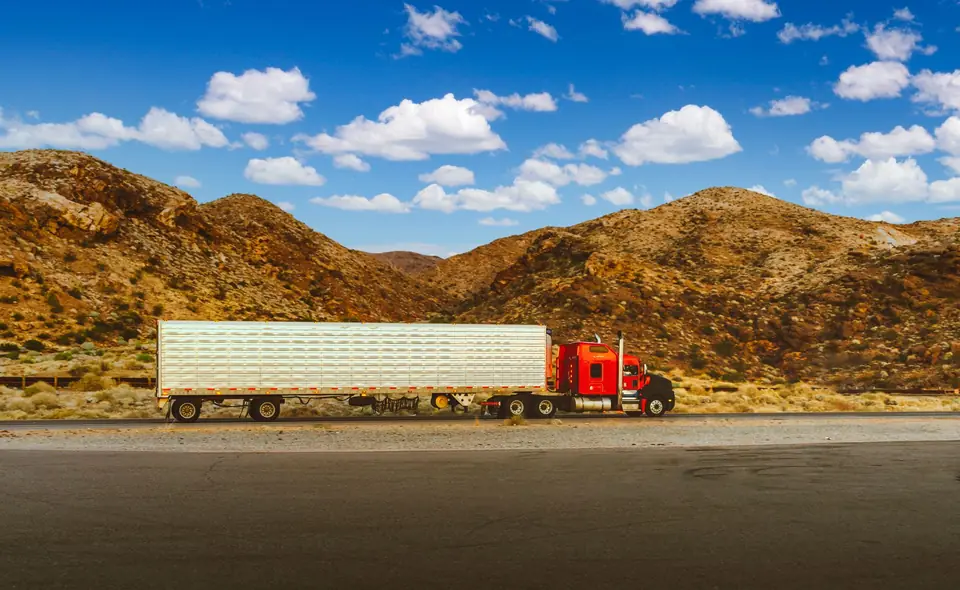
The corridor: interstates and freight hubs
Every truck entering peninsular Florida comes down one of three roads: I-95 along the Atlantic coast from Savannah to Jacksonville, Daytona Beach, West Palm Beach and Miami; I-75 from Atlanta and Macon through Valdosta, Gainesville and Ocala to Tampa, then down the Gulf coast to Naples and across Alligator Alley to Fort Lauderdale; and I-10 from Mobile and Pensacola across the Panhandle to Jacksonville. Inside the state, I-4 cuts diagonally from Daytona through Orlando and Lakeland to Tampa, and Florida's Turnpike runs from I-75 at Wildwood through Orlando to Miami and Homestead.
Freight hubs:
- Jacksonville: JAXPORT and the junction of I-95 and I-10; the gateway distribution market for the whole state and southern Georgia.
- Orlando: central Florida's main distribution market, where I-4 meets the Turnpike, serving tourism, hospitality and a fast-growing population.
- Lakeland and Polk County: the I-4 corridor between Tampa and Orlando, a dense cluster of grocery and retail DCs, within a few hours of most of the state.
- Tampa: Port Tampa Bay and the I-75 / I-4 interchange.
- South Florida: PortMiami, Port Everglades in Fort Lauderdale, and the Doral and Medley warehouse districts near Miami International Airport, which handle a large share of U.S. trade with Latin America and the Caribbean.
Lane table: Florida mileage and transit days
Approximate highway miles; direct PTL at about 500 miles per driver day, LTL with terminal days added. Most inbound Florida freight comes from Atlanta, the Carolinas, Texas and the Midwest, so the long lanes matter as much as the in-state ones.
| Lane | Main route | Approx. miles | Direct PTL | LTL via terminals |
|---|---|---|---|---|
| Orlando – Tampa | I-4 | 85 | Same day | 1 day |
| Jacksonville – Orlando | I-95 / I-4 | 140 | Same day | 1–2 days |
| Orlando – Miami | Florida's Turnpike | 235 | Same day / next morning | 1–2 days |
| Tampa – Miami | I-75 (Alligator Alley) | 280 | 1 day | 2 days |
| Jacksonville – Miami | I-95 | 345 | 1 day | 2 days |
| Atlanta, GA – Orlando | I-75 / Turnpike | 440 | 1 day | 2 days |
| Charlotte, NC – Orlando | I-77 / I-26 / I-95 | 525 | 1–2 days | 2–3 days |
| Atlanta, GA – Miami | I-75 / Turnpike | 660 | 2 days | 2–3 days |
| Dallas, TX – Orlando | I-20 / I-10 / I-75 | 1,110 | 3 days | 3–4 days |
| Chicago, IL – Orlando | I-65 / I-75 | 1,155 | 3 days | 3–4 days |
South Florida traffic on I-95 and the Palmetto Expressway is heavy most of the day, and many Miami-area receivers set tight appointment windows. A direct PTL driver coming down the Turnpike overnight can make an early appointment that an LTL linehaul arriving at a Miami terminal mid-morning cannot.
The Florida imbalance: headhaul in, backhaul out
Florida has a large population, a huge tourism economy and relatively little heavy manufacturing. Trucks bring in building materials, furniture, groceries, appliances, consumer goods and hospitality equipment; far fewer loads leave. A carrier that delivers in Miami often has to drive several hundred miles north, sometimes all the way to Georgia, before finding the next load. Carriers price that empty return into inbound rates.
| Direction | What carriers see | Pricing effect |
|---|---|---|
| Inbound (Atlanta, Carolinas, Midwest to Florida) | Plenty of freight; the truck may leave the state empty | Headhaul: firm, often well above the per-mile average |
| Outbound, outside produce season | Many trucks, few loads | Backhaul: carriers discount to get north loaded |
| Outbound, during produce season | Reefer demand pulls trucks; dry van carriers with reefers switch over | Can firm up sharply, especially from South Florida and the Plant City area |
| In-state (Orlando – Tampa – Miami) | Short, dense regional lanes | Balanced; set more by traffic and appointments |
For partial truckload this cuts both ways. Inbound, a PTL carrier is happy to add your 8 to 12 skids to a Florida-bound trailer, but the price reflects the headhaul. Outbound, PTL carriers looking for anything heading north often quote aggressively; if your freight leaves Florida, ask for outbound PTL quotes before booking LTL. Our dimensional engine prices miles symmetrically, so on inbound Florida lanes read its PTL figure as a floor and on outbound lanes as a ceiling.
Commodities and seasons
Inbound high-cube freight is dominated by construction and hospitality: cabinetry and millwork for condo and hotel projects, commercial kitchen equipment, furniture, HVAC units, and pool and patio products. Outbound, the state ships produce, recycled paper and plastics, marine products and boats, and export freight consolidated through Miami for Latin America.
- Produce season, roughly November to May. Winter vegetables from Immokalee, Homestead and the Lake Okeechobee area; strawberries from the Plant City area, peaking roughly January to March; citrus from about October into spring; watermelons in late spring. Reefer demand rises across the state and spills into dry van rates outbound.
- Snowbird season, roughly November to April. Population swells, retail and grocery volume grows, and inbound trucks stay busy.
- Hurricane season, June 1 to November 30. A forecast landfall shuts ports and pickups, evacuation traffic and contraflow tie up I-75, I-95, I-4 and the Turnpike, and relief freight pulls trucks into the state for weeks afterward. Inbound rates usually spike; outbound capacity briefly floods.
- Summer heat and storms. Daily thunderstorms slow delivery in South Florida, and trailer heat affects adhesives, coatings and some electronics.
See commercial kitchen equipment and cabinetry and millwork for packaging guidance on the two inbound commodities that trip cube rules most often.
Equipment availability
- 53' dry vans: plentiful inbound and plentiful leaving the state empty; outbound dry van capacity is easy to find outside produce peaks.
- 26' box trucks: common in Miami, Fort Lauderdale, Orlando and Tampa, used for hotel, restaurant, condo and retail deliveries. Many South Florida high-rise and hospitality receivers have short docks or none.
- Reefers: abundant in winter because carriers reposition into Florida for produce, but committed to that freight.
- Flatbeds: steady demand from construction; supply is decent in Jacksonville and Tampa.
Worked example: nine kitchen-equipment skids, Atlanta to Miami (660 miles)
Nine 48×40 skids of crated restaurant equipment, 76 inches tall, 330 lbs each, marked do not stack. Rated against R+L Carriers' RLCA 100 thresholds (750 cu ft under 6 PCF, 12 linear feet).
| Measure | Value | Working |
|---|---|---|
| Actual cube | 760.0 cu ft | 48 × 40 × 76 ÷ 1,728 = 84.44 × 9 |
| Imputed cube at 96 in | 960.0 cu ft | 106.67 × 9 |
| Weight | 2,970 lbs | 330 × 9 |
| Actual density | 3.91 PCF · Class 250 | 2,970 ÷ 760 |
| Imputed density | 3.09 PCF · Class 250 | 2,970 ÷ 960 |
| Linear feet | 20.0 LF | 9 skids two across = 5 rows × 48 in ÷ 12 |
| Synthetic weight | 5,760 lbs | 960 × 6 PCF |
The load is past 750 cu ft even before imputation, and 20 linear feet clear the 12-foot line. Indicative costs at 660 miles:
| Mode | Indicative cost | Transit |
|---|---|---|
| Standard LTL as booked (Class 250) | $1,071 | 2–3 days |
| Standard LTL after cubic capacity re-bill | $1,415 | 2–3 days |
| Spot volume LTL | $755 | 2–3 days |
| Direct partial truckload | $866 | 2 days |
| Dedicated 26' box truck | $1,551 | 2 days |
| 53' full truckload | $1,617 | 2 days |
Direct PTL at $866 is $205 below the as-booked LTL price and $549 below the re-bill, with no cross-dock for crated equipment. This is the inbound, headhaul direction, so expect live PTL tenders at or above the engine figure; the same skids moving Miami to Atlanta outside produce season would usually price below it. Indicative figures from our cost model; carriers reissue rules tariffs and the current RLCA 100 issue governs.
Run a Florida load: Atlanta to Miami is 660 miles
- Safe — tariff cube, density and linear feet stay under the carrier's cube and linear-foot rules.
- Tier 1 — 350 cu ft or more under 3 PCF (XPO, Saia, ABF, Estes): synthetic weight of 6 lbs per tariff cubic foot.
- Re-bill — 750 cu ft or more under 6 PCF, or linear feet at the carrier's rule: book volume LTL or direct partial truckload.