Two kinds of packaging freight
A blow-molding plant ships empty PET or HDPE bottles to a filler. A corrugated plant ships flat box blanks to a packer. A gaylord recycler ships collapsed bulk bins back to the field. All three are "packaging", and they could hardly be more different on a freight bill.
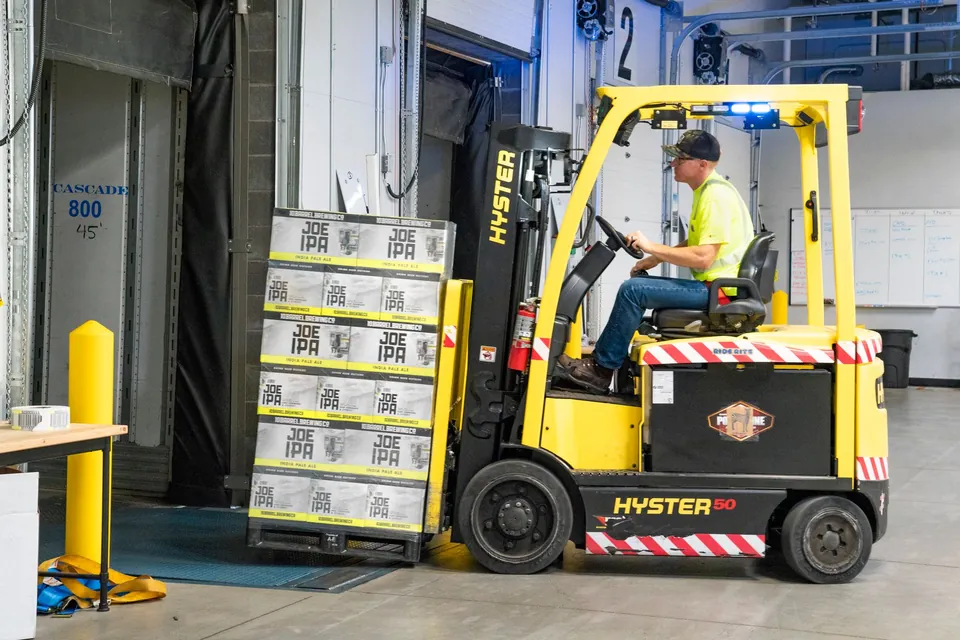
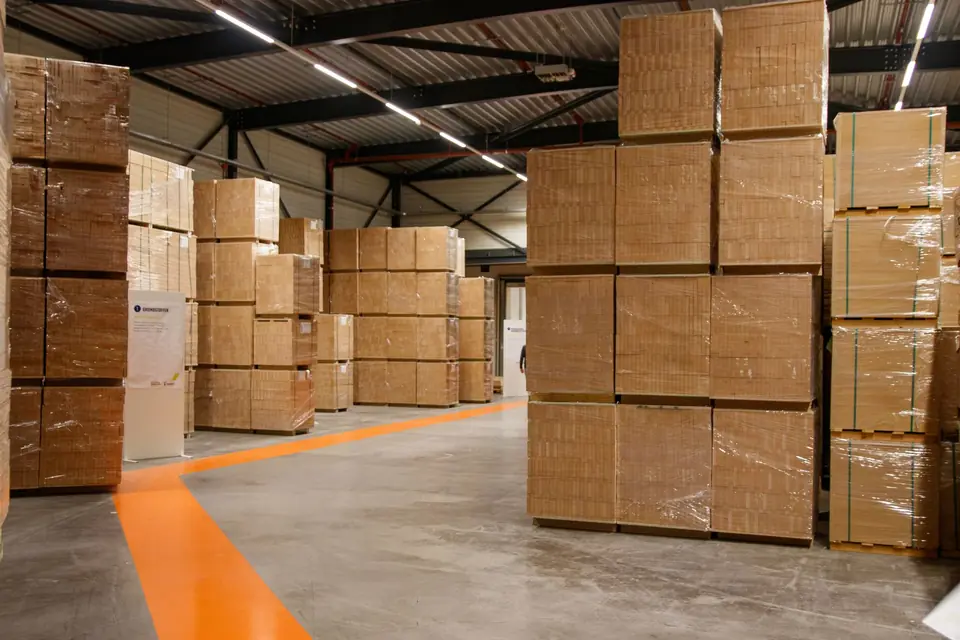
- Formed empty containers (blown bottles, jars, pails, foam inserts, molded trays) are 1 to 3 PCF. Bottle pallets are built tall, often to 96 to 100 in, with tier sheets between layers and a top frame or stretch hood, because filling a trailer by volume is the only way to make the freight pay.
- Flat, nested or unformed stock (corrugated sheets, knocked-down boxes, collapsed gaylords, PET preforms) is 10 to 22 PCF. Preforms in particular are tiny test-tube shapes that a blow molder later inflates into bottles; a gaylord of them is dense freight.
The first group lives at class 250 to 300 and trips every cube rule. The second group rates at class 70 to 92.5 and mostly clears the cube rules, but runs into linear-foot rules because the shipments are big. The routing is different for each, and this is a sector where full truckloads are common: many bottle and preform programs ship 26 or more pallets at a time.
A third flow sits between the two: returnable packaging. Plastic bulk bins, collapsible totes, steel racks and pallet boxes go out full and come back empty, and the empty leg is where density collapses. A bulk bin that ships full at 25 PCF comes back at under 3 PCF unless it is folded down. If your returnables collapse, make collapsing them part of the dock procedure before pickup, and send the folded dimensions with the tender. If they do not collapse, the return leg is a cube shipment and should be quoted on linear feet from the start, not discovered on a re-bill.
Typical packaging handling units
| Unit | L × W × H (in) | Lbs | Cu ft | PCF | Class | Cubed to 96 in |
|---|---|---|---|---|---|---|
| Blown PET bottles, 48 × 40 pallet | 48 × 40 × 96 | 260 | 106.7 | 2.44 | 250 | already 96 in |
| Blown bottles, 56 × 44 bottle pallet | 56 × 44 × 100 | 320 | 142.6 | 2.24 | 250 | over 96 in |
| Molded foam inserts | 48 × 40 × 72 | 110 | 80.0 | 1.38 | 300 | 1.03 PCF · 300 |
| Empty gaylords, nested upright | 48 × 40 × 90 | 360 | 100.0 | 3.60 | 250 | 3.38 PCF · 250 |
| Collapsed gaylords, flat | 48 × 40 × 60 | 700 | 66.7 | 10.50 | 92.5 | 6.56 PCF · 125 |
| Flat corrugated sheets or KD boxes | 48 × 40 × 60 | 1,150 | 66.7 | 17.25 | 70 | 10.78 PCF · 92.5 |
| PET preforms in a gaylord | 48 × 40 × 45 | 1,100 | 50.0 | 22.00 | 70 | 10.31 PCF · 92.5 |
Weights are representative. The table shows the single biggest decision in packaging logistics: the same gaylord moves at class 250 standing open and class 92.5 collapsed, and the same plastic moves at class 70 as preforms and class 250 as bottles. Where the supply chain allows the product to travel flat or unformed, it almost always should.
Run twelve pallets of empty bottles against Estes EXLA 105
- Safe — tariff cube, density and linear feet stay under the carrier's cube and linear-foot rules.
- Tier 1 — 350 cu ft or more under 3 PCF (XPO, Saia, ABF, Estes): synthetic weight of 6 lbs per tariff cubic foot.
- Re-bill — 750 cu ft or more under 6 PCF, or linear feet at the carrier's rule: book volume LTL or direct partial truckload.
Worked example: twelve pallets of empty bottles on Estes
A blow molder ships twelve pallets of empty bottles, each 48 × 40 × 96 in and 260 lbs, 450 miles to a filler. The pallets have tier sheets and a top frame but nothing can ride on them. The shipper asks for an Estes quote; EXLA 105 has 350 and 750 cu ft low-density thresholds and a linear-foot rule.
Cube = 106.7 × 12 = 1,280.0 cu ft · Weight = 260 × 12 = 3,120 lbs
Density = 3,120 ÷ 1,280.0 = 2.44 PCF → Sub 3, class 250
Linear feet = 6 rows × 48 in ÷ 12 = 24.0 LF
There is no phantom cube here because the pallets already reach 96 in, but nothing else helps. The load is over 350 cu ft under 3 PCF, over 750 cu ft under 6 PCF and over 12 LF. Synthetic weight at 6 PCF is 1,280.0 × 6 = 7,680 lbs.
| Option at 450 miles | Indicative linehaul |
|---|---|
| Class 250 LTL as booked | $928 |
| After cube re-rate and W&I fee | $1,550 |
| Spot volume LTL on 24 LF | $573 |
| Direct partial truckload on 24 LF | $654 |
| Dedicated 53 ft high-cube van | $1,103 |
Volume LTL and the partial are $81 apart, and both are well under the class-rated figure. The full 53 ft van costs $449 more than the partial, but it carries 26 floor positions instead of 12: about $42 per pallet against about $55 on the partial ($1,103 ÷ 26 and $654 ÷ 12). A filler that can receive 26 pallets should almost always take a full van. A dedicated 26 ft box truck is not an option at all: its interior height is about 96 in and its door about 90 in, so 96 in bottle pallets will not go in.
Compare twelve pallets of flat corrugated at 48 × 40 × 60 in and 1,150 lbs: 800.0 cu ft and 13,800 lbs, 17.25 PCF, class 70. No cube rule applies, but at 24 LF the load still crosses the linear-foot line, so it belongs on a volume LTL or partial quote too.
Building packaging loads that rate well
- Ship flat whenever the customer can form on site. Collapsed gaylords and KD boxes are three to six times denser than formed ones.
- Build to the trailer, not the pallet. In a 53 ft van with about 110 in of interior height, a 96 to 100 in bottle pallet uses the cube that a 60 in pallet wastes. For dense stock, build pallets that can stack two high under about 100 in total.
- Use tier sheets and top frames. They keep tall bottle pallets square, and a rigid top frame is what makes double-stacking of shorter loads possible.
- Stretch hood or wrap to the pallet. Film anchored to the deck boards holds a 96 in load together through braking; film around the product only lets the stack walk off the pallet.
- Keep it off the 26 ft box truck. For tall bottle loads, insist on van equipment and confirm interior height on the tender.
- Write real heights on the BOL. A 96 in pallet written as 72 in is a guaranteed inspection; see the BOL checklist.
Equipment and accessorials
Packaging moves plant to plant, so most loads are dock to dock without liftgates or inside delivery. The equipment questions are about height and floor space:
| Equipment | Interior height | Fit for packaging |
|---|---|---|
| 53 ft high-cube dry van | About 110 in | Best for bottle pallets to 100 in and double-stacked flat stock |
| LTL pup trailers | Varies by carrier, often 104–110 in | Fine for 96 in pallets; check with the carrier for anything taller |
| 26 ft straight box truck | About 96 in, door about 90 in | Only for short pallets and small orders |
| 40 ft high-cube container | About 106 in interior | Import packaging; transload to a van at the port |
Drop-trailer programs are common on high-volume packaging lanes: the carrier leaves an empty trailer at the plant and the shipper loads it over a shift. On partial and truckload tenders we can ask for that, and for the live-load and live-unload windows that fillers schedule around.
Which mode Cubic Transport tenders packaging on
Small orders of flat stock under 350 cu ft are ordinary LTL. Empty-container orders from about six pallets up go on a volume LTL or direct partial quote priced on linear feet. Anything from about 22 pallets up goes on a 53 ft high-cube truckload, where per-pallet cost drops sharply. For shippers with a weekly program, a shared truckload that pairs your empties with another shipper's dense freight on the same lane can beat both.